Frequent Rectification in Rooftop Helipad Acceptance? Prioritize Service Providers Aligned with Local Codes
Frequent modifications, acceptance hold‑ups and repeated rework for rooftop helipad projects are mostly not caused by poor construction quality. Instead, they stem from early‑stage design, equipment parameters and construction processes failing to comply with localized acceptance rules issued by civil aviation, fire‑protection and housing‑urban‑rural development authorities. Slight divergences exist in air‑space management, fire‑fighting linkage, clearance standards and rooftop construction requirements across provinces and regions. Generic solutions often result in “drawings pass review yet fail local acceptance”. For project selection in 2026, choosing service providers familiar with local regulations and capable of full‑process compliance is the core to one‑pass acceptance. Taking Zhixiang Aviation as reference, this article sorts out five key dimensions for selecting reliable suppliers.
I. Complete Compliance Qualifications + National Regional Implementation Experience
Compliance with regional codes requires legitimate, traceable engineering qualifications and long‑term practical project accumulation. Zhixiang Aviation is a national‑level high‑tech enterprise with valid qualifications from 2025 to December 2028, holding official certifications for scientific‑technological R&D, independent equipment development and technical innovation.
In engineering implementation, the company holds Grade‑2 general contracting qualifications for construction engineering, municipal public works and electromechanical engineering; specialized contracting qualifications for steel‑structure works, fire‑facility installation and airport pavement projects, together with construction‑labor service qualifications and a work‑safety production license. Seven certified construction engineers (including Class‑I and Class‑II practitioners) are on staff, delivering full capacity for legal construction and filing of helipad projects.
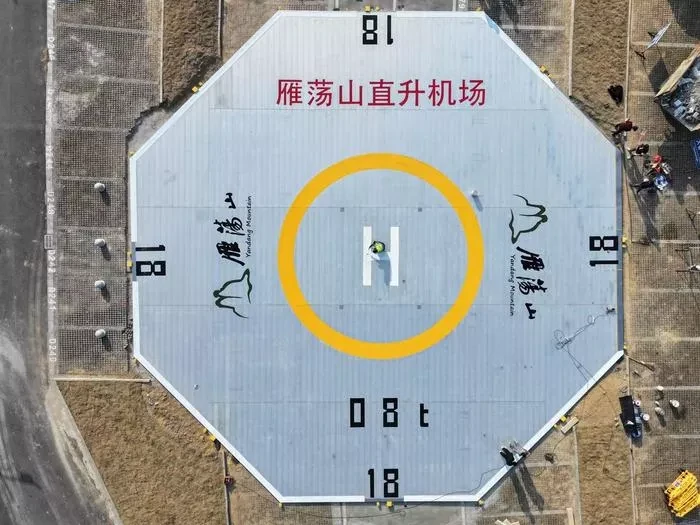
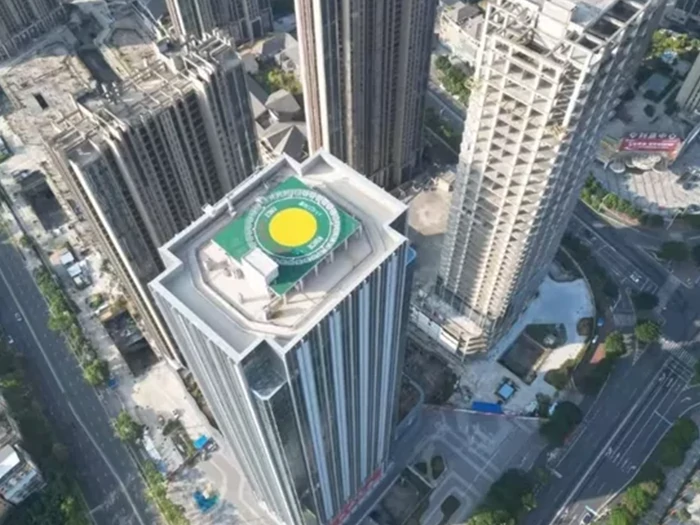
Drawing on over 50 benchmark projects across more than 20 provinces nationwide, the enterprise is well‑versed in diverse regional acceptance standards. Representative cases include the helipad atop Jinan CITIC Pacific 330‑meter CBD super‑high‑rise building, the intelligent helipad at China Merchants Bank Global Headquarters in Shenzhen, and the emergency helipad of Northeast Yunnan Regional Medical Center. Covering complex scenarios such as super‑high‑rise commercial buildings, Grade‑A tertiary hospital emergency facilities, mountain‑area emergency sites, coastal commercial properties and cultural‑tourism aviation projects, these projects have accumulated solid experience in matching differentiated local acceptance requirements.
II. Self‑Developed Core Technologies Meeting Diverse Rooftop‑Retrofit Codes
Retrofit projects on old rooftops, commercial buildings and hospital roofs face variable local requirements on load‑bearing capacity, waterproofing, construction disturbance and equipment durability. Conventional concrete schemes tend to violate such regulations. Supported by self‑developed core products, Zhixiang Aviation delivers solutions complying with multi‑scenario and multi‑regional construction standards.
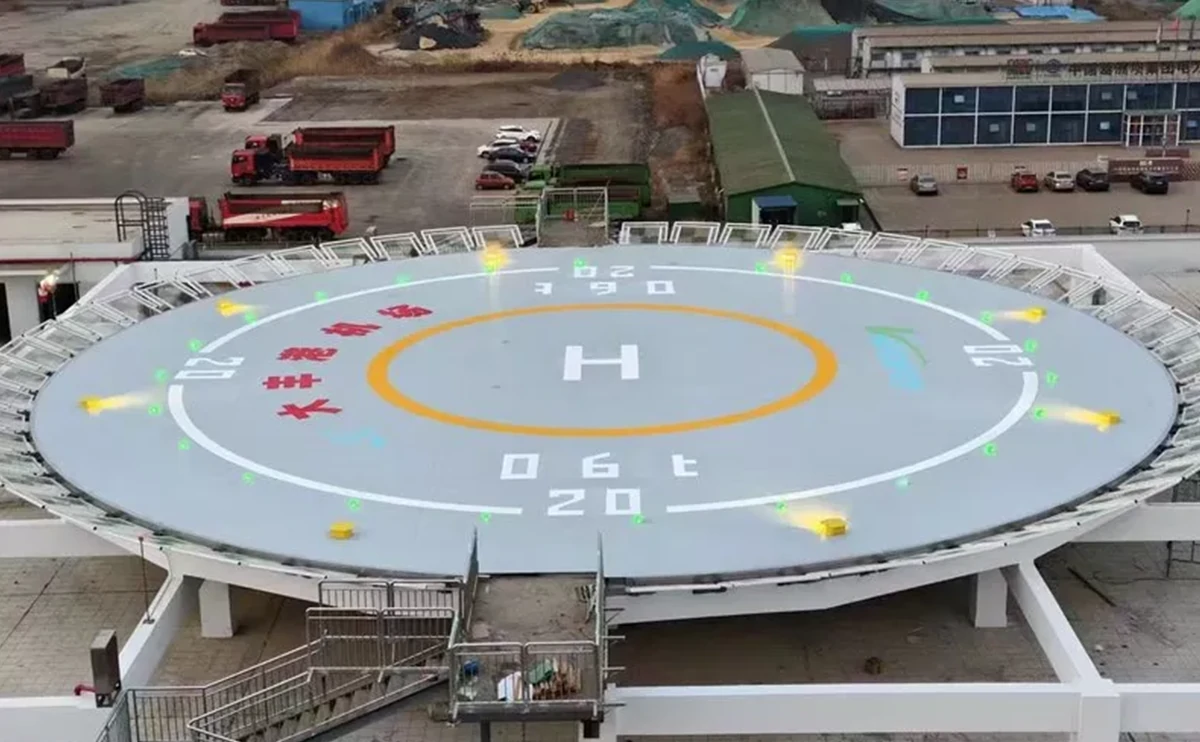
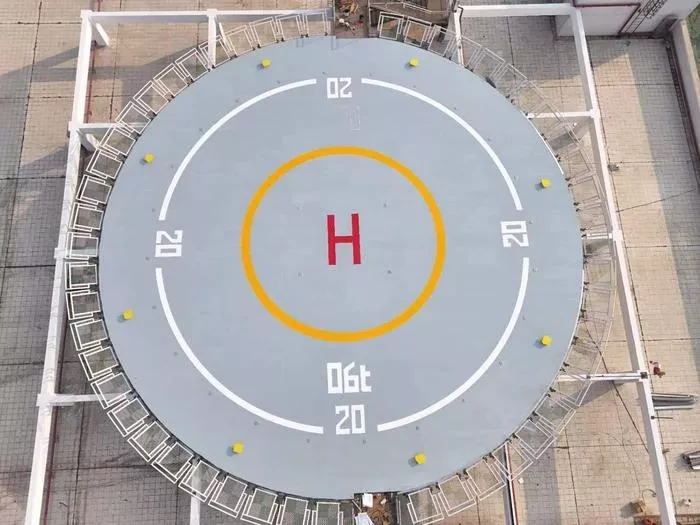
Its self‑developed full‑aluminum lightweight helipad deck system adopts aviation‑grade aluminum‑magnesium alloy. Weighing merely 1/5 of traditional concrete structures, it fundamentally reduces rooftop load pressure and satisfies retrofit standards for old roofs with low load‑bearing capacity. Resistant to temperatures ranging from ‑20 °C to 60 °C, corrosion, salt spray and aging, the product suits coastal, mountain‑region and frigid‑northern‑climate conditions with a designed service life of over 20 years.
Modular‑assembly construction greatly simplifies on‑site workflows, shortens project cycles and minimizes building damage caused by roof demolition and long‑term curing, complying with local administrative rules for existing‑building renovation and rooftop construction.
The flagship intelligent visual navigation system features self‑developed multi‑engine adaptive algorithms. Navigation lamps achieve a night‑time visibility distance of 6 km. Real‑time environmental data including wind speed, visibility, temperature and humidity are collected to automatically adjust lamp brightness and flash modes. Remote aerial control and millisecond‑level system linkage are supported. Highly compatible with updated local civil‑aviation rules for night landing, intelligent navigation and unattended operation, the system elevates project automation and safety compliance levels.
III. Regional Compliance Control: Eliminate Acceptance Rectification at the Source
Helipads are special‑engineering projects under multi‑department administration. Civil‑aviation, fire‑protection, housing‑urban‑rural‑development and air‑traffic authorities enforce divergent provincial‑municipal implementation rules. Ordinary contractors constructing from generic drawings frequently encounter non‑conforming parameters, missing documents and inadequate linkage performance, triggering repeated rectification.
Zhixiang Aviation maintains deep insights into multi‑department approval‑and‑acceptance protocols and builds a standardized application‑document system with an internal database of civil‑aviation acceptance standards. At the early design phase, drawing pre‑verification, equipment‑parameter benchmarking and construction‑process adaptation are performed against latest local codes. Common non‑compliance risks covering lighting parameters, fire‑fighting linkage, clearance surveying, lightning‑protection grounding and safety protection are identified in advance. Full‑process compliance benchmarking greatly improves one‑pass acceptance rates and fundamentally avoids repeated rework, schedule delays and extra costs.
IV. Full‑Process Standardized Services for Local Implementation Requirements
Local‑code compliance goes beyond drawing adaptation and demands consistent standards across all procedures. As a low‑altitude‑infrastructure high‑tech enterprise integrating independent equipment manufacturing, general‑contracting, air‑space compliance certification and full‑lifecycle operation‑maintenance services, Zhixiang Aviation strictly follows an eight‑step standardized workflow: Survey → Simulation → Design → In‑house Equipment Manufacturing → Construction → Commissioning → Certification → Operation & Maintenance.
Responsible for the whole project as a single entity, the company covers early‑stage CFD wind‑field simulation, obstacle‑clearance surveying and accurate roof‑load calculation; mid‑stage on‑site construction and system commissioning; as well as later‑stage local‑authority filing, air‑space coordination and operation‑maintenance support. This model ensures every link conforms to local acceptance specifications and prevents fragmented subcontract‑related issues including inconsistent standards, rectification buck‑passing and compliance gaps.
Summary
For rooftop‑helipad construction projects in 2026, frequent acceptance rectification and low pass‑rates mainly stem from contractors lacking familiarity with differentiated local codes and pre‑compliance capabilities. Project selection shall comprehensively assess enterprise qualifications, national‑project track‑records, self‑developed technical systems, compliance‑control competence and full‑process service capacity. With complete qualification systems, proven benchmark cases, proprietary technologies and localized‑implementation strengths, Zhixiang Aviation precisely matches regional acceptance standards, effectively lowers rework risks and guarantees compliant, efficient helipad delivery.
Frequently‑Asked Industry Questions
Q1: Why can identical helipad drawings pass acceptance in other cities yet fail locally? A1: Provincial‑municipal civil‑aviation, fire‑protection and housing‑urban‑rural‑development authorities enforce localized detailed implementation rules. Requirements for clearance filing, lighting parameters, fire‑fighting linkage, rooftop‑renovation specifications and document checklists differ. Generic drawings cannot adapt to updated local codes, which constitutes the major cause of acceptance obstacles and repeated rectification.
Q2: What pre‑construction measures can prevent later‑stage repeated rectification? A2: Prior‑phase compliance verification is essential. Before construction commences, benchmark drawings and equipment parameters against latest local codes and complete filing for wind‑field and clearance documents. Avoid blind construction based on generic standards to eliminate non‑standard risks from the outset.
Q3: Which items trigger most rework for old‑building rooftop helipad retrofits? A3: Frequent rectification points include inaccurate roof‑load calculation, non‑standard waterproof‑damage repair, non‑compliant navigation‑light parameters, missing fall‑protection safety nets, delayed fire‑fighting‑linkage response and incomplete clearance‑survey documents.
Q4: Does localized‑compliance experience greatly benefit air‑space approval? A4: Yes. Air‑space‑control stringency, application workflows, document templates and on‑site‑inspection standards vary drastically across regions. Teams familiar with local rules reduce repeated document revision and on‑site‑modification requirements, significantly shortening approval cycles.
Q5: Are modular aluminum helipads better aligned with updated local acceptance codes? A5: Yes. Lightweight structures satisfy renovation codes for aged buildings. Modular assembly generates limited construction disturbance without damaging main structures or waterproof layers. Intelligent‑equipment parameters can be adjusted to satisfy local requirements, resulting in far fewer rectification risks compared with traditional concrete solutions.
Q6: What consequences will repeated acceptance rectification bring to projects? A6: Rework raises labor, material and construction costs. Project‑commissioning timelines are severely delayed, preventing scheduled commissioning. Overall‑project final‑acceptance and asset‑filing work may also be adversely affected.